[Steel Structure·Technology] Discussion on the technical path of parametric architectural design
[Steel Structure·Technology] Discussion on the technical path of parametric architectural design
Official Account: Non-Deconstructive · Author: Zhou Wenqi (Venchy) This article is reproduced from the public account non-deconstruction (id: non-structure)
Author: Shang Ye Nong
- Introduction
With the development of digital technology, parametric architectural design is gradually becoming well-known in the field of architectural design. Architectural parametric design is an architectural design method. Many architects or scholars have discussed the concept of parametric design [1] [2] [3] [4]. The core idea of parametric architectural design is to turn all elements of architectural design into variables of a certain function. By changing the function, or changing the algorithm, designers can obtain different architectural design plans.
Parameterization is a concept in associative geometry. Beginning in the 1960s and 1970s, this idea was introduced into computer science and developed rapidly. It combined the ideas of variable geometry and geometric constraints, and introduced intelligent algorithms such as neural networks and geometric reasoning. With the development of computers, in the 1980s and 1990s, relatively mature parametric theory was widely used in related manufacturing industries such as aircraft, automobiles, ships, etc.
Parametric architectural design has emerged since the mid-to-late 1990s. Columbia School of Architecture, MIT School of Architecture in the United States, and the Architectural Association in the United Kingdom have all set up teaching courses on parametric design. Later, it began to be gradually accepted by avant-garde architects and applied to actual projects.
In the early days of the development of parametric architectural design, architects often completed the scheme design manually and then used parametric design methods to produce models. For example, Frank Gehry completed the Guggenheim Museum in 1997[5]. Faced with such complex architectural forms, traditional two-dimensional drawing technology is no longer able to do anything and needs to rely on three-dimensional digital technology to achieve it. This has led to the transformation of traditional two-dimensional design technology into three-dimensional design technology.
Parametric architectural design has continued to develop since then. Pioneer offices represented by Zaha are thoroughly applying the idea of parametric design, combining design ideas and design tools to generate new architectural forms. For example, the Azerbaijan Khaliyev Cultural Center[6] completed by Zaha Hadid in 2013, the concept of parametric design runs through the entire concept, plan and even the construction drawing stage.
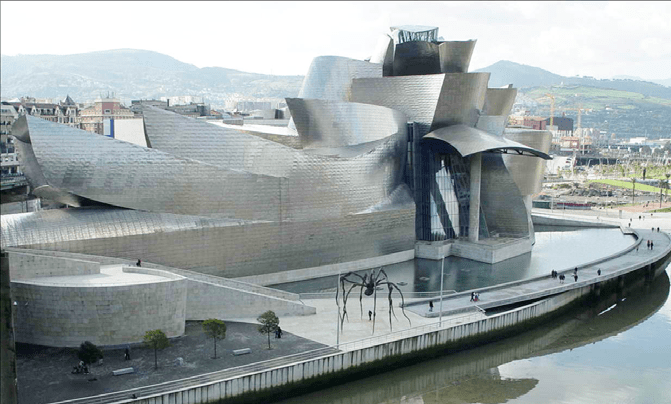
Figure 1 Guggenheim Museum
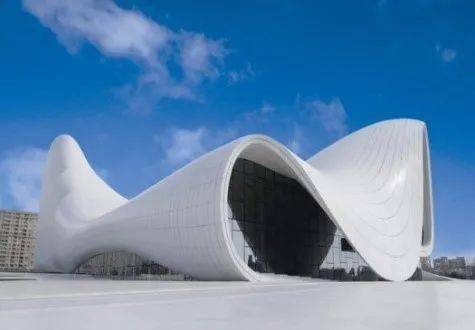
Figure 2 Khaliyev Cultural Center
当下,使用参数化设计的建筑形式相较于传统的建筑设计形式,往往显得更为复杂及多样,较多地采用比较夸张的表现手法。以至于每当提到参数化,建筑师们就会把它和ZAHA,MAD,蓝天组这类先锋事务所联系在一起,也会把它和grasshopper划上等号,而这样的理解是有失偏颇的。
Parametric design is essentially a design method or design process that is not related to any architectural form. Some scholars use the concept of “nonlinear architecture” [7] to define buildings that cannot be expressed using traditional design methods. Although parametric architectural design has developed through widespread demand for nonlinear architectural design, parametric design does not equal nonlinear design. This can expand the concept of parametric design. Parametric design can be used not only in the design process of non-linear buildings, but also in traditional types of architectural design.
- Technical path of parametric design
In the traditional architectural design process, each link from the plan to the construction drawing is relatively discrete and needs to be based on different software platforms. However, design itself is a constantly iterative process, which needs to be constantly adjusted based on the results of step-by-step design. Such a discrete process mainly has two disadvantages:
(1) Work efficiency is relatively low. When any link in these discrete processes needs to be modified, it will cause changes in other majors or links. This kind of modification consumes a huge amount of time during design.
(2) Faced with such an inefficient work model, there is not enough time to consider all aspects of the design, and the design results largely rely on the designer’s experience and technical accumulation. The quality of buildings designed under this model is difficult to guarantee.
Parametric design can effectively solve the shortcomings of the traditional architectural design process. In the parametric design process, the designer first defines the design variables, and then defines the logic and algorithm for generating the architectural plan. Finally, the corresponding design plan is obtained, and the design plan can be adjusted instantly by modifying only the variables. For example, in the parametric design process of the Shanghai Tower [8], the designer only used variables such as the overall rotation angle of the tower and the retraction ratio to complete the definition of the entire building skin through relevant algorithm logic based on Grasshopper, and adjusted the design results through variables in real time based on relevant performance requirements.
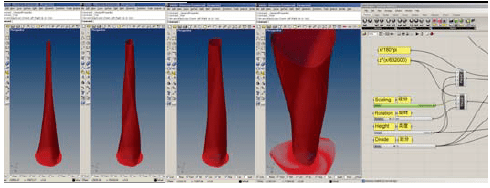
图3 上海中心表皮构建造
2.1 Understanding variables
Variables are a prerequisite for subsequent work in the parametric design process. Parameters in the concept of parameterization are variables to be defined during the design process. Design variables influence the outcome of the design, and it is simple and efficient to directly adjust the architectural plan by changing the variables. The construction of architectural plan logic and algorithms needs to be based on defined variables. When defining variables, architects and engineers need to select variables that have a greater impact on the design results based on corresponding theoretical and practical foundations.
2.2 Thoughts on algorithms
算法的构建是参数化设计进行的根本,也是工作量最大的一个部分。设计师完成定义好设计目标,设置好变量之后的主要工作,就是在构建和选择参数化设计的算法和逻辑。建筑设计过程中的所有计算过程都定义为参数化设计相关的算法,而这些算法,可以按以下的层次进行划分:
2.2.1 Algorithms at the spatial geometry level
Generating form and constructing space is the primary link in the architectural design process. Currently, algorithms based on parametric concepts are emerging to help architects create different forms of space and layout. Joel Simon uses generative design to explore theoretical and optimized floor layouts [9]. Xu Weiguo, Li Ning and other scholars create architectural forms through bionic simulation of biological forms [10]. Lin Qiuda used the ifs algorithm to conduct architectural fractal design [11]. Combining mechanical concepts, methods such as force density method, dynamic relaxation method, finite element method [12][13], topology optimization [14][15] and other methods to create bodies with optimal mechanical properties are also emerging. A series of meshing algorithms [16][17] such as wavefront method, mapping method, grid-based method, sweep method, etc. are also constantly developing to match the architect’s pursuit of shape and aesthetics.
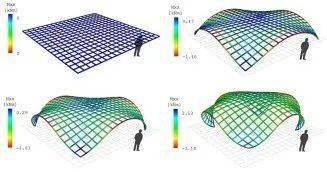
Figure 4 Form finding using dynamic relaxation method
2.2.2 Algorithms at the performance analysis level
Architectural design must not only meet people’s aesthetic and spatial needs, but the design of related building performance is also a very important part of it. Sunlight, pedestrian flow, noise, structural mechanical properties, comfort and other aspects of the demand are also indicators that need to be considered and met during the architectural design process. At present, relying on parametric design, corresponding algorithms have also been developed, and various parametric design platforms also provide related algorithm resources [18][19][20]. By connecting the building model obtained through parametric design to the algorithm of performance analysis, relevant building performance indicators can be calculated, thereby providing a basis for the optimization of building design.
Although the grasshopper platform provides many analysis tools, the calculation of performance indicators does not solely rely on grasshopper. The parametric design process can completely connect to existing performance design software or compile related algorithms by yourself. Grasshopper isn’t everything when it comes to parameterization.
2.2.3 最优化层面的算法
The establishment of models and the acquisition of performance indicators are not the end of architectural design. Designers still need to continuously optimize architectural plans based on the results of performance analysis.
In the traditional design process, the results of performance analysis often rely on designers to judge, adjust and iterate. The quality of the design is largely restricted by the designer’s own level. In the parametric design process, human experience factors can be put aside, and a series of optimization algorithms such as genetic algorithms and simulated annealing algorithms can be used to iterate the results of building performance analysis through computers.
For example, in the iterative process of the genetic algorithm: the genetic algorithm initializes a set of variables and submits them to the performance analysis algorithm. The performance analysis algorithm obtains the performance indicators and returns them to the genetic algorithm. The genetic algorithm then generates a set of relatively excellent variables based on this set of calculation results and submits them to the performance design algorithm. In this way, human interference is completely eliminated. The algorithm enables the performance analysis to realize self-iteration to obtain optimal results. This process requires no manual intervention at all. Compared with traditional processes, it is not only more efficient, but also of better quality.
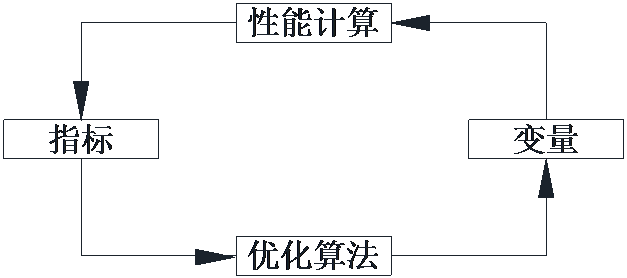
Figure 5 Optimization algorithm workflow
2.3 Automation of the design process
First of all, it is necessary to consider the parametric design path of the entire design process. Although adjustments between schemes can be quickly realized through parameterization, this process is often one-way and discrete. Architectural plans cannot interact on different platforms to achieve automatic iterative optimization of designs. To solve this problem, it is necessary to establish a platform to coordinate different software systems, and realize automated control of different software on this platform to achieve automated feedback and iteration between variables and design results.
Secondly, automated means are needed to comprehensively consider the goals of the entire design process. Architectural design is not only about design optimization for a single goal, it also needs to consider the needs of all aspects such as architecture, structure, equipment, etc. Every major, and even every major, has many goals that need to be optimized. Some variables will affect the design goals of multiple majors at the same time. Then, it is necessary to introduce the mechanism of each goal into the parametric design process, and achieve comprehensive consideration of different goals through automated means.
Thirdly, data standardization is an important condition for automating the design process. In the context of parametric design, the data transmission formats between different software platforms are different. During this transmission process, architects and engineers need to translate the corresponding data so that the data can be freely shared between different platforms, which allows the automated process to be built more effectively.
- Development of parametric design
3.1 Parametric design and BIM
By integrating the concepts of parametric design and BIM [21], parametric design can achieve broader development. The current misunderstanding of parametric design in the industry is limiting the development of parametric design. Breaking out of the grasshopper framework, there is no doubt that BIM can help parametric design.
The keyword construction information of BIM makes BIM come with parametric genes. Parametric design itself is to continuously process and transfer data according to variables to achieve the design purpose. The data contained in the BIM model is undoubtedly a rich treasure for parametric design. Any data defined in the BIM model can be used as the basic data for parametric design. Through the parametric process, new BIM models can also be defined. Dynamo under the Revit platform is a parametric design tool based on BIM.
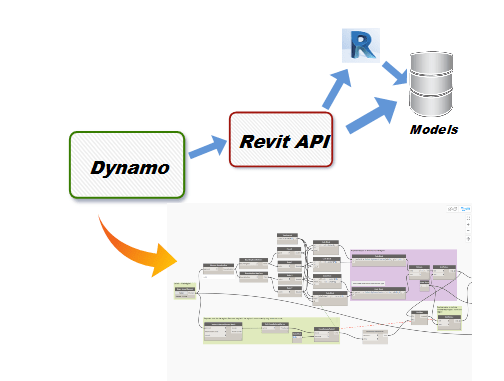
Figure 6 REVIT and Dynamo
3.2 Parametric design helps the application of VR in the construction industry
The development of VR has become a trend [22], and within the architectural design industry, the application of VR is also being continuously expanded. A series of VR plug-ins have appeared on the grasshopper platform. At the same time, architectural VR software such as Shining City is also developing. VR provides designers with a more intuitive experience during the architectural design process. Parametrically designed models are natural VR materials. Through parametric design, all parties in the project can feel the impact of design variables on the design in real time in the VR environment, which also provides a new means of decision-making.
3.3 Parametric design provides possibilities for new construction methods
数字化建造已经成为建筑行业内研究的前沿[23]。参数化设计生成的模型内部蕴含的各种模型信息,也天然地成为了数字化建造的基础数据。通过数字化建造技术,采用机械臂或者机器人等手段,可以降低施工现场的时间人力成本和安全风险。同时,数字化建造技术也能实现对更为复杂的建筑构件的加工,从而实现更为复杂的建筑形态。
4 Conclusion
With the development of digital technology, parametric design methods are being used more and more widely. However, there are still many misunderstandings about parametric design in the current architectural design industry. Parametric design is a design method that combines digital technology.
Parametric design organically integrates all aspects of the design process to form a complete digital process, and expands a series of branches in this digital process to analyze various indicators in the performance-based design process of architectural design. At the same time, the optimal architectural design plan can be found through optimization algorithms. Therefore, the working mode of parametric design can improve the designer’s work efficiency and work quality.
In addition, by combining the concept of parametric design with BIM, parametric design can be more widely used; based on parametric design technology and combined with VR, a new experience is given to the architectural design process; parametric design technology also provides more possibilities for digital construction.
Note: This article was published in the May 2020 issue of “Architecture Technology”
References:
[1] Gao Yan. Parametric design - more efficient design technology and methods [J]. World Architecture, 2008 (5): 28-33
[2] Xu Minmin. The impact of parametric nonlinear architectural design on architectural art [D], Chinese Academy of Arts, 2010
[3] Wang Meilun. Application of parametric design in the design of complex architectural structures [D]. Beijing University of Civil Engineering and Architecture, 2016
[4] Ren Zhenhua. Preliminary study on parametric design of complex architectural shapes[D]. South China University of Technology, 2010
[5] Zhao Mochao. Design and construction of complex-shaped buildings under parametric logic [D], Hunan University, 2010
[6] T Winterstetter ,M Alkan. Engineering complex geometries – the Heydar Aliyev Centre in Baku[J].Steel Construction,2015(8):65-71.
[7]徐卫国.非线性建筑设计[J].建筑学报.2005(12):32-35
[8] Xia Jun, Peng Wu. Parametric design of Shanghai Tower shape and facade [C]. The 9th Global Conference of the World Society of Tall Urban Architecture. 2012: 112-119
[9] Joel Simon.Evolving Floorplans[EB/OL]. https://www.joelsimon.net/evo_floorplans.html
[10] Xu Weiguo, Li Ning. Digital illustration of biomorphology [M]. China Construction Industry Press. 2018
[11] Lin Qiuda. Architectural fractal design based on three-dimensional IFS algorithm [J]. World Architecture. 2013 (09): 106-109
[12]Sigrid Adriaenssens,Philippe Block,Diederik Veenendaal and Chris Williams. Shell Structure for Architecture[M].Routledge.2014
[13] EMIL POULSEN. Structural design and analysis of elastically bent gridshells[D]. Chalmers University of Technology.2015
[14]曹倩,侯胜利,汪洋.OptiStruct在超高层建筑结构优化中的应用[C]. Altair 2012 HyperWorks 技术大会论文集.2012
[15] Alessandro Beghini, Mark Sarkisian,. Geometry Optimization in Structural Design[C]. SEAOC 2014 83rd Annual Convention.2014
[16] Ma Teng. Research on mesh division technology of free-form surface mesh structure [D]. Zhejiang University. 2015
[17]王伟,樊宏周,席光.参数曲面三角网格生成的改进波前法[J].西安交通大学学报,2014,48(3):61-67
[18] Rex Wang. SUNFLOWER[EB/OL]. https://www.food4rhino.com/app/sunflower
[19] City Form Lab. URBAN NETWORK ANALYSIS TOOLBOX [EB/OL]. https://www.food4rhino.com/app/urban-network-analysis-toolbox
[20] Clemens Preisinger.karamba3D[EB/OL]. http://www.karamba3d.com/
[21] Gao Yan. Parametric and BIM based on design practice[J]. Southern Architecture. 2014, 4:9-19
[22]Vanessa Quirk. Disrupting Reality: How VR Is Changing Architecture’s Present and Future[EB/OL]. https://www.metropolismag.com/architecture/disrupting-reality-how-vr-is-changing-architecture-present-future/
[23] Xu Weiguo. Toward “intelligent construction” in the construction industry [N]. China Construction News. 2019-06-07(8)
(If there is any infringement, please contact us to delete it) Return to Sohu to see more
*This document is reproduced and organized by AI from non-deconstructed public account articles and is for learning reference only. *
LOADING…